

August 9, 2026
Micheal J
2026-09-14
Modern Real Estate Capital Movement and Business Banking Infrastructure

The Mechanics of Modern Real Estate Capital Movement
When capital moves in commercial real estate, residential portfolios, or multi-family developments, it does not resemble the predictable, low-dollar subscription billing of a SaaS startup. Real estate operators orchestrate heavy financial machinery: multi-million dollar title company wire transfers, cross-border private equity syndications, recurring contractor ACH disbursements, and complex multi-entity cash distributions. In this high-stakes environment, understanding the plumbing of global and domestic payment identifiers—from IBAN numbers and SWIFT codes to domestic ABA routing numbers—is not an academic exercise; it is an operational necessity. Yet, while generic financial platforms focus on tech company expense reports and corporate travel perks, real estate businesses require a financial architecture built specifically around property deeds, rehab cost bases, and multi-LLC corporate structures.
Navigating Global and Domestic Payment Identifiers
International expansion, foreign capital partners, and cross-border property acquisitions introduce a layer of financial terminology that can derail transactions if mishandled. Chief among these is the International Bank Account Number (IBAN). Originating in Europe under ISO 13616 standards and managed formally by SWIFT, an IBAN standardizes bank account identification across more than 69 countries. By combining a two-letter country code, check digits for mathematical validation, and a Basic Bank Account Number (BBAN), IBANs drastically reduce the catastrophic human errors that once plagued international wire transfers.
However, for operators rooted in North America, the domestic financial landscape relies on different mechanisms. The United States utilizes nine-digit ABA routing numbers paired with individual account numbers, while Canada relies on institution numbers, transit numbers, and account numbers. When foreign capital flows into US-based real estate syndications, or when domestic developers wire funds internationally for overseas material sourcing, understanding how these systems interact is critical. A wire transfer destined for a U.S. escrow account requires precise coordination between SWIFT/BIC codes for the banking institution and domestic routing numbers for the specific beneficiary account. Furthermore, managing these flows requires absolute clarity on exchange rates, intermediary bank fees, and settlement timelines to prevent costly transaction delays at closing.
Comparing Financial Payment Codes and Systems in Real Estate
When structuring cross-border investments or managing multi-jurisdictional portfolios, real estate operators encounter a variety of account codes and payment networks. The following comparison outlines how these systems function and where they apply to real estate operations.
Primary Purpose
- IBAN Number: Identifies individual bank accounts globally
- SWIFT / BIC Code: Identifies specific financial institutions globally
- ABA Routing Number: Identifies domestic U.S. banking institutions
Standard Format
- IBAN Number: Alphanumeric string up to 34 characters
- SWIFT / BIC Code: 8 to 11 alphanumeric characters
- ABA Routing Number: Nine-digit numerical code
Geographic Scope
- IBAN Number: Extensively used in Europe, Middle East, and parts of Africa/Caribbean
- SWIFT / BIC Code: Global network for international messaging and routing
- ABA Routing Number: Domestic United States banking system
Real Estate Application
- IBAN Number: Receiving cross-border investor funds and managing overseas supplier payments
- SWIFT / BIC Code: Directing international wire transfers to the correct banking partner
- ABA Routing Number: Executing domestic escrow transfers, mortgage payments, and local vendor ACH
The Compliance Trap: Why Generic Fintechs Fail Real Estate Operators
A pervasive frustration among real estate developers, property managers, and fix-and-flip investors is the sudden, unexplained account freeze imposed by generic fintech platforms. Software solutions designed for venture-backed startups operate under automated risk models tuned for predictable software subscription revenue, recurring SaaS invoices, and low-risk employee software licenses. When a real estate business executes a six-figure wire transfer for a property acquisition, transfers capital rapidly between five different LLCs, or disburses bulk ACH payments to independent drywall contractors, generic risk algorithms flag the activity as anomalous.
This mismatch between tech-centric compliance models and real estate operational reality leads to frozen funds, delayed closings, and administrative gridlock. Real estate is not an edge case; it is an industry defined by heavy capital expenditure, asset-backed transactions, and multi-entity corporate partitioning. Operating a modern real estate business requires banking infrastructure that recognizes why large capital movements, multi-LLC layering, and contractor payouts are standard operating procedure. Without risk models specifically tuned for real estate transaction patterns, operators remain vulnerable to arbitrary platform restrictions.
Mastering Outbound AP: Wires, ACH, and Contractor Disbursements
Accounts payable in real estate involves far more than paying a monthly cloud software subscription. General contractors need material deposits, framing crews require weekly disbursements, municipal authorities demand permit fees, and title companies require verified escrow wires. Managing these outflows through legacy banking portals or fragmented payment tools creates an administrative nightmare that drains dozens of hours every month. When payments are disconnected from your project accounting, tracking exact cost basis becomes a manual guessing game.
Modern real estate financial management demands unified cash movement where banking, corporate cards, and accounts payable live on a single platform. When you initiate a same-day ACH transfer to a plumber or a domestic wire for a property acquisition deposit, the transaction should not exist in a vacuum. It must automatically attach the corresponding vendor invoice, tag the expenditure to the correct property or rehab budget, and synchronize with your accounting ledger without manual data entry. Furthermore, physical and virtual corporate cards issued to project managers, maintenance technicians, and site supervisors must enforce strict guardrails. Allowing a contractor to carry an unmonitored company card invites budget overruns and lost receipts. By issuing virtual cards with hard merchant category restrictions, vendor-specific locks, and automated photo receipt capture at the register, operators eliminate unauthorized spend before the transaction even clears.
Multi-Entity Cash Control Across Complex Portfolios
Asset protection and liability management dictate that professional real estate operators rarely hold properties under a single corporate umbrella. Whether managing a portfolio of single-family rentals, running active fix-and-flip syndicates, or developing multi-family apartment complexes, operators establish dedicated LLCs for individual deals or regional portfolios. Maintaining absolute separation between these entities is non-negotiable for legal protection, tax compliance, and lender due diligence. Commingling funds across different LLCs can compromise liability shields and trigger severe accounting failures during audits or loan applications.
Yet, traditional banking institutions force operators to log into separate online portals for every single LLC, creating a fractured financial overview where cash visibility is obscured behind multiple passwords and disconnected accounts. Reconciling month-end financials across ten distinct corporate entities becomes an archaeological excavation of bank statements and spreadsheet tags. A purpose-built financial platform solves this fragmentation by providing a centralized master dashboard with robust multi-entity architecture. Operators can establish dedicated sub-accounts with unique routing and account numbers for each property or LLC, ensuring clean financial segregation. At the same time, a unified portfolio overview provides instant visibility into total cash position, active rehab expenditures, and net operating income across every entity from a single login.
Elevating Real Estate Accounting and Audit Readiness
Lenders underwriting refinance applications, certified public accountants preparing annual tax returns, and equity partners reviewing quarterly distributions all demand one fundamental asset: immaculate books. When financial records rely on manual post-transaction categorization, human error inevitably creeps in. Expenses get misallocated between properties, contractor receipts vanish into physical shoeboxes, and cost basis calculations become speculative estimates. Achieving audit-ready financials requires shifting from reactive bookkeeping to proactive transaction coding.
When every corporate card swipe, ACH transfer, and wire payment is automatically attributed to its specific property, unit, or deal at the exact moment of execution, the accounting ledger receives pristine data upstream. Month-end reconciliation transitions from a multi-day data-entry ritual into a streamlined operational review. Capital improvements are cleanly separated from ongoing maintenance, ensuring accurate depreciation schedules and bulletproof documentation for refinance appraisals and investor reporting.
Intelligent Financial Oversight and Deal Analysis
Beyond day-to-day expense management and capital movement, modern real estate operators require deep analytical clarity before committing capital to a new acquisition. Traditional spreadsheet underwriting and manual property comp analysis are slow, prone to oversight, and disconnected from actual operational cash flow. Integrating financial intelligence directly into your banking and spend management platform transforms raw transaction data into actionable strategic insights. Advanced AI-driven financial assistants capable of analyzing investment properties, estimating rehabilitation costs, predicting after-repair values (ARV), and forecasting cash flow positions give operators a decisive competitive edge. By evaluating spending patterns in real time, surfacing hidden cost overruns before they drain contingency budgets, and answering plain-language questions about portfolio profitability, intelligent financial tools empower real estate businesses to move faster and spend wiser.
Scale Your Real Estate Portfolio on Modern Rails
Running a growing real estate business on legacy banking tools and generic corporate spend platforms creates an artificial ceiling on your portfolio's potential. Whether you manage ten rental doors, execute fifty fix-and-flips a year, or sponsor multi-family developments, your financial infrastructure must match the sophistication of your operations. Eliminate manual data entry, secure every dollar against property budgets, and take total control of your multi-entity cash flow.
Ready to replace fragmented bank portals and manual bookkeeping with purpose-built financial architecture? Discover how Glep combines business banking, controlled corporate cards, automated expense tracking, and real estate intelligence into a single platform. Take control of your portfolio and run every property like a true business on Glep today.

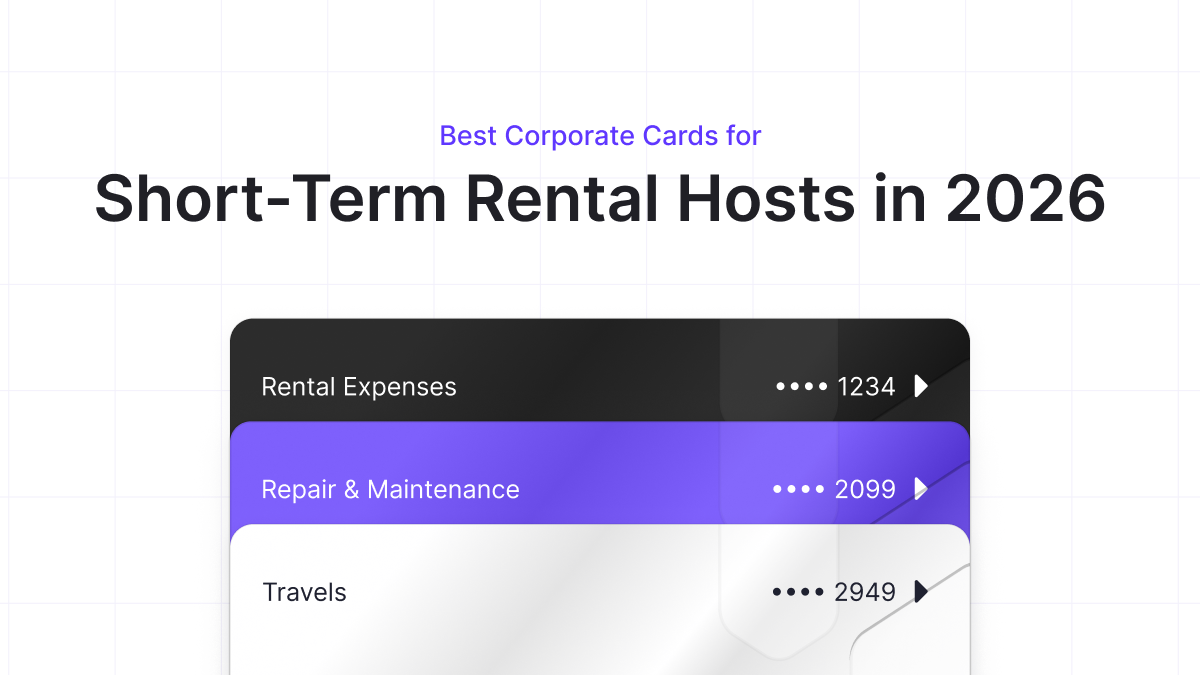

Corporate cards, banking and expense management built for real estate businesses.
Glep is a financial technology company, not an FDIC-insured bank. Banking services are provided by Core Bank, Member FDIC. FDIC deposit insurance covers the failure of an insured bank. Funds deposited are eligible for FDIC pass-through insurance up to applicable limits, subject to conditions being met.
The Glep Visa Card is issued by Core Bank pursuant to a license from Visa U.S.A. Inc. and may be used everywhere Visa is accepted. Card purchases may be eligible for cash back. Cash back and other rewards are offered by Glep through its Rewards Program, not by Core Bank.
Visa is a registered trademark of Visa International Service Association. All other trademarks and service marks belong to their respective owners.
Aida is an AI-powered assistant developed by Glep Labs. Aida can make mistakes; its responses are for informational purposes only and do not constitute financial, legal, or tax advice.
Testimonials reflect individual experiences and may not be representative of all customers. Individual results may vary.