

August 9, 2026
Micheal J
2026-09-14
Fixing and Rebuilding Real Estate Business Credit Without Starting Over

The Real Estate Credit Paradox: Why Tech-Centric Neobanks Freeze Your Growth
Real estate investing is fundamentally capital-intensive, relying heavily on commercial credit lines, supplier tradelines, and lender confidence. Yet, many portfolio owners find themselves caught in a frustrating trap: a single delayed vendor payment or tight cash flow cycle during a major rehab damages their business credit score, triggering higher interest rates and stalled loan approvals. For years, founders experiencing these credit roadblocks were told to either live with the penalty or abandon their corporate structure entirely and start from scratch with a fresh Employer Identification Number (EIN).
For real estate investors, starting over is an operational nightmare. Dissolving an active LLC or abandoning an established corporate entity means sacrificing years of seasoning, losing favorable vendor terms, and severing relationships with regional lenders who value historical operating performance. More importantly, generic fintech platforms—particularly those engineered for venture-backed software startups—often misinterpret standard real estate transaction patterns. Large irregular transfers, multi-entity cash movements, and contractor payouts frequently trigger automated compliance alerts or account freezes on platforms designed for SaaS companies.
Fixing your business credit profile does not require detonating your corporate architecture. With the right financial infrastructure, dedicated banking tools, and disciplined spend management, real estate operators can rehabilitate their credit standing, establish robust tradelines, and position their portfolios for aggressive scaling without losing their operational history.
Rebuilding Versus Restarting: The Strategic Decision for Property Portfolios
When business credit takes a significant hit, leadership faces a pivotal fork in the road: rehabilitate the existing credit profile or liquidate the entity and restart with a clean slate. In the vast majority of active real estate businesses, rebuilding is the faster, more cost-effective, and ultimately more credible path. Lenders evaluate track records, and a cleaned-up, actively seasoned entity demonstrates resilience and financial maturity.
Restarting an entity only makes structural sense under extreme circumstances, such as when a company is completely inactive, buried in insurmountable debt, or entangled in severe legal or tax disputes. For operating real estate portfolios, wiping the slate clean destroys your credit history, voids existing vendor agreements, and forces you back to square one with commercial lenders who require seasoned financial statements.
Is your business active and generating rental or flip revenue?
- Action for Rebuilding: Keep your existing entity, correct errors, and execute a structured credit recovery plan.
- Action for Restarting: Not recommended; you forfeit valuable seasoning and banking history.
Are your credit issues limited to isolated late payments or high revolving utilization?
- Action for Rebuilding: Rebuild your profile by paying down balances, disputing errors, and establishing automated payment workflows.
- Action for Restarting: Unnecessary; minor credit blemishes can be systematically repaired.
Do you have major tax liens, active lawsuits, or unresolved bankruptcies?
- Action for Rebuilding: Resolve underlying legal and tax hurdles first before attempting credit rehabilitation.
- Action for Restarting: Evaluate whether restarting is necessary to isolate catastrophic liabilities from future operations.
For most property investors, the rebuild path preserves credit history, maintains vital supplier relationships, and builds long-term institutional credibility.
Anatomy of a Real Estate Credit Profile: Beyond Bureau Scores
Commercial credit scoring differs vastly from consumer credit scoring. While personal scores measure individual debt management, business credit scores—tracked across Dun & Bradstreet, Experian Business, and Equifax Business—evaluate how reliably your corporate entity handles commercial obligations, supplier terms, and institutional debt.
Understanding the core components of your business credit profile allows you to target your recovery efforts effectively:
- Payment History and Timeliness: The single most heavily weighted factor in your business credit score. On-time payments to material suppliers, general contractors, and lenders signal operational stability.
- Credit Utilization Ratio: The percentage of available credit your business is currently using. High utilization across revolving lines or credit cards signals liquidity strain to commercial lenders.
- Age and Seasoning of Accounts: The length of time your business entities have maintained active, positive tradelines. Older, well-managed accounts heavily reinforce your borrowing capacity.
- Credit Mix: A healthy combination of revolving credit (such as corporate cards and supplier accounts) and installment credit (such as equipment loans and property mortgages).
- Public Records: The presence of liens, judgments, or bankruptcies associated with your corporate entity. Public records severely depress borrowing terms until fully resolved and cleared.
Protecting and strengthening each of these pillars requires continuous visibility and precise operational controls, ensuring that cash flow fluctuations never inadvertently sabotage your creditworthiness.
Establishing and Strengthening Tradelines in Property Operations
Rebuilding a damaged credit profile requires injecting positive payment data into the major commercial bureaus. In the real estate sector, this process involves leveraging the operational expenses you are already paying every month—such as building materials, lumber yards, contractor services, and utility management—to build institutional trust.
To accelerate credit recovery, investors should audit and expand their active tradelines:
Vendor and Supplier Credit: Establish net-30 or net-60 payment terms with local building supply houses, hardware distributors, and property maintenance vendors that actively report payment activity to commercial credit bureaus.
Secured Business Credit Instruments: Utilize financial tools that allow you to secure credit limits with collateral deposits, ensuring that every on-time payment is formally transmitted to credit reporting agencies.
Systematic Dispute Resolution: Regularly pull business credit reports from Dun & Bradstreet, Experian, and Equifax to identify and dispute inaccurate late payment marks, outdated collection accounts, or erroneous public records.
Strategic Debt Amortization: Prioritize paying down revolving balances to push credit utilization ratios well below the critical 30 percent threshold, immediately signaling reduced financial risk to prospective lenders.
When vendors and lenders see consistent, documented payment performance across active accounts, credit scores begin a steady, predictable upward trajectory.
Isolating Liabilities Across Multi-Entity Portfolios
Real estate investors rarely operate under a single umbrella entity. To mitigate liability, protect assets, and streamline tax reporting, sophisticated operators establish separate Limited Liability Companies (LLCs) for individual properties, development projects, or portfolio tiers. However, managing credit and expenses across multiple entities introduces severe administrative friction if the financial infrastructure is fragmented.
Commingling funds across entities or relying on personal credit cards to bridge short-term cash flow gaps in corporate projects creates a dual hazard: it compromises your corporate veil, undermining the legal protection your LLCs were designed to provide, and it prevents your individual business entities from building independent credit profiles.
Robust credit rehabilitation requires strict structural separation. Each LLC must maintain its own dedicated accounts, distinct payment instruments, and clearly attributed transaction records. By managing multi-entity portfolios through a unified digital dashboard, investors can monitor credit health, liquidity positions, and spend limits across every single property without logging into multiple disparate banking portals or risking cross-contamination of funds.
The Strategic Role of Controlled Corporate Cards in Credit Rehabilitation
Traditional corporate credit cards often fail real estate operators because they lack granular, project-level controls, forcing finance teams to distribute personal cards or cash advances to project managers, general contractors, and maintenance crews. This lack of oversight frequently leads to out-of-policy spending, lost receipts, and missed payment deadlines.
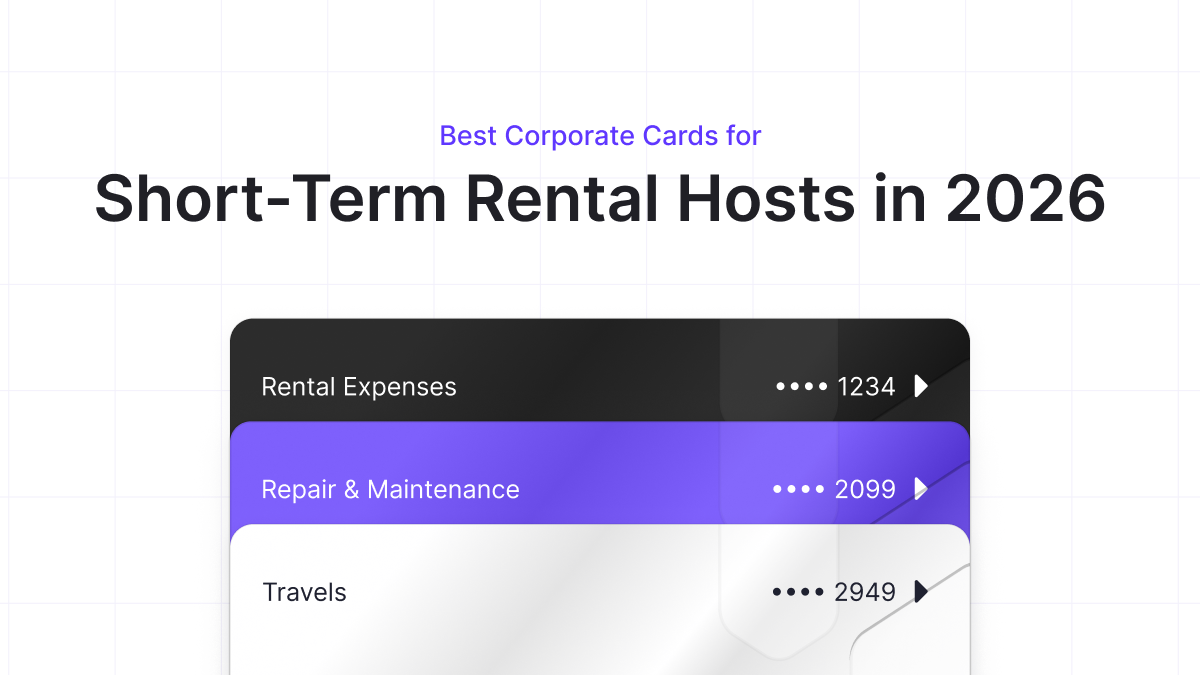
To successfully rebuild business credit, operators must implement corporate cards equipped with real-time spend controls, category restrictions, and automated reporting. Virtual and physical cards linked directly to specific property budgets ensure that spending stays strictly within pre-approved parameters. When a card is capped at a specific budget threshold or restricted to approved merchant categories like building supply retailers, unauthorized charges and budget overruns are eliminated before they happen.
Furthermore, tying these cards to centralized spend management platforms ensures that every transaction is instantly categorized, receipt-matched, and accounted for, removing the manual reconciliation bottlenecks that cause administrative delays and missed payment cycles.
Automating Workflows to Eliminate Late Payment Penalties
The vast majority of business credit degradation does not stem from insolvency; it stems from administrative friction. When accounts payable processes rely on manual invoice entry, fragmented bank logins, and paper check runs, human error inevitably leads to delayed payments, missed due dates, and unnecessary credit score penalties.
Modern real estate operators eliminate this vulnerability through intelligent automation. Automating recurring payments for mortgages, insurance, utilities, and supplier accounts ensures that due dates are never missed, regardless of how complex the portfolio's operational tempo becomes. When payment execution is synchronized directly with real-time cash flow visibility, your business maintains an unblemished payment history that satisfies strict commercial underwriting standards.
Moving away from legacy accounting hurdles means that your books are continuously updated, verified, and ready for review at a moment's notice.
Navigating Lender Due Diligence with Audit-Ready Records
When the time comes to refinance a commercial property, secure a construction loan, or scale your portfolio with institutional capital, lenders subject your entity's financials to rigorous scrutiny. Underwriters examine income history, debt service coverage ratios, liquidity reserves, and documented cost bases.
Deals stall and financing terms sour when records are disorganized—such as rehab invoices buried in a physical shoebox or expenses blended across multiple properties within a single comminuted bank account. Clean, continuous, and audit-ready records transform lender due diligence from an adversarial scramble into a seamless, confident transaction.
By maintaining property-level transaction attribution from the exact moment an expense occurs, real estate operators ensure that their cost basis, capital improvements, and operating expenditures are impeccably documented. Lenders receive clean financial exports per entity and per property, validating your creditworthiness and accelerating time-to-closing.
Run Every Property and Entity with Modern Financial Control
Fixing and rebuilding your business credit profile is an exercise in operational discipline, clear separation, and intelligent systems. By abandoning fragmented banking tools and adopting a unified financial platform designed explicitly for the realities of real estate operations, you protect your personal credit, strengthen your corporate tradelines, and build long-term borrowing power.
Glep is the modern financial and banking solution built specifically for real estate operators, investors, and developers. Combining corporate cards with granular spend controls, FDIC-insured business banking, multi-entity management, and real-time property-level expense tracking, Glep gives you the clarity and control you need to run every door like a business. Stop fighting generic startup software and start scaling your portfolio on rails built for real estate. Take control of your financial future and explore how Glep empowers modern real estate businesses today.


Corporate cards, banking and expense management built for real estate businesses.
Glep is a financial technology company, not an FDIC-insured bank. Banking services are provided by Core Bank, Member FDIC. FDIC deposit insurance covers the failure of an insured bank. Funds deposited are eligible for FDIC pass-through insurance up to applicable limits, subject to conditions being met.
The Glep Visa Card is issued by Core Bank pursuant to a license from Visa U.S.A. Inc. and may be used everywhere Visa is accepted. Card purchases may be eligible for cash back. Cash back and other rewards are offered by Glep through its Rewards Program, not by Core Bank.
Visa is a registered trademark of Visa International Service Association. All other trademarks and service marks belong to their respective owners.
Aida is an AI-powered assistant developed by Glep Labs. Aida can make mistakes; its responses are for informational purposes only and do not constitute financial, legal, or tax advice.
Testimonials reflect individual experiences and may not be representative of all customers. Individual results may vary.