

August 9, 2026
Micheal J
2026-09-14
The Evolution of Real Estate Financial Stacks: Beyond Generic Fintech

The Real Estate Tech Stack Evolution
For decades, operating a growing real estate portfolio meant accepting an invisible tax: administrative friction. While venture-backed software startups and e-commerce brands leveraged agile spend management platforms, real estate operators were told to make do with a patchwork of legacy regional bank accounts, personal credit cards for emergency repairs, and end-of-month bookkeeping marathons in QuickBooks. That divide is no longer sustainable. High-growth property managers, fix-and-flip investors, developers, and multi-family sponsors are realizing that generic financial tools built for tech org charts simply cannot handle the structural complexities of real estate.
When analyzing how modern operational spend moves across industries, a clear pattern emerges: efficiency belongs to platforms that own the entry point of capital and abstract operational complexity. In software, aggregators route traffic across fragmented foundation models. In real estate, the parallel is exact. The winning financial stack is not a collection of disconnected bank portals and manual expense reports; it is a unified, vertical platform where banking, corporate cards, multi-entity accounting, and property-level attribution live under one roof.
The Hidden Cost of Horizontal Software
Horizontal spend management platforms and tech-focused neobanks have transformed corporate finance for SaaS companies, marketing agencies, and digital enterprises. However, when an enterprise software platform attempts to serve a real estate business, fundamental architectural mismatches appear immediately. Generic platforms understand headcount, departmental budgets, and software subscriptions. They do not understand parcels, units, rehab budgets, cost bases, or multi-LLC holding structures.
Consider what happens when a property portfolio relies on a generic corporate card provider. An acquisitions manager visits three properties in a single morning, stopping for supplies at a local hardware store, paying a municipal permit fee online, and reimbursing a subcontractor for emergency plumbing repairs. On a generic platform, those three transactions land in a single corporate expense feed with vague merchant descriptions. Back at the office, a bookkeeper or asset manager must manually cross-reference credit card statements with contractor text messages, property management software logs, and bank wires to figure out which LLC and which specific door absorbed the cost.
This manual reconciliation loop is the exact reason why real estate back offices lose three to four days every single month on bookkeeping reconstruction. It introduces human error, obscures true per-door profitability, and delays the financial reporting required by lenders and equity partners. Real estate is not an edge case in corporate finance; it is a distinct asset class with operational workflows that demand purpose-built infrastructure.
Anatomy of a Purpose-Built Real Estate Financial Stack
To eliminate administrative bloat and protect net operating margins, modern real estate operators are transitioning to vertical financial platforms designed around the realities of property acquisition, development, and management. A true real estate financial stack integrates three core pillars into a single pane of glass: dynamic spend controls, multi-entity banking, and automated property-level attribution.
1. Property-Level Attribution at the Point of Swipe
The moment a transaction occurs, the system must recognize its context. Whether it is a utility bill for a mid-term rental, a drywall deposit for a fix-and-flip, or ongoing maintenance supplies for a multi-family property, every dollar must be tagged to its specific door, project, or entity instantly. This ensures that profit and loss statements are live dashboards rather than historical autopsy reports compiled weeks after month-end.
2. Granular Card Controls for Field Crews and Contractors
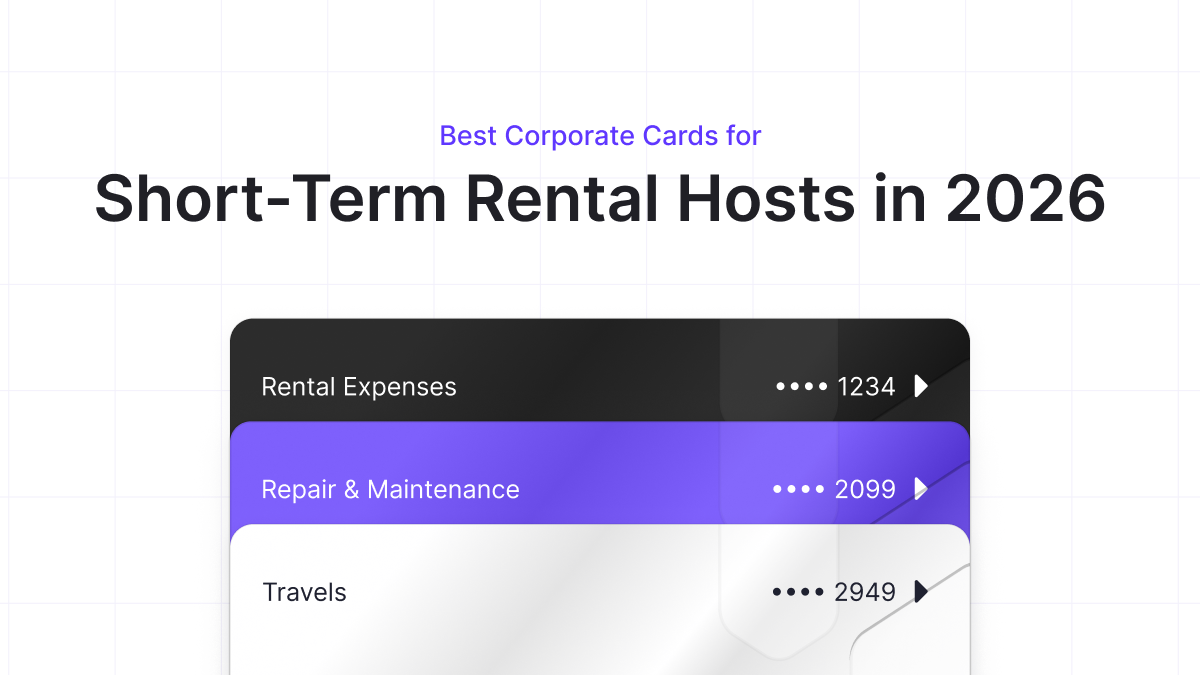
Relying on personal credit cards, cash advances, or shared debit cards exposes portfolios to immense financial risk. Purpose-built infrastructure allows operators to issue physical and virtual corporate cards tailored to specific use cases. A general contractor receives a card capped strictly at the materials budget for a single flip. A maintenance technician carries a card restricted to designated merchant categories. When the budget is reached or the project wraps, the card is frozen or terminated instantly with a single click.
3. Multi-Entity Architecture Without Fragmentation
Asset protection strategies dictate that real estate operators isolate risk by housing properties across distinct LLCs. Managing ten separate entities traditionally required logging into multiple regional bank portals, juggling disparate login credentials, and risking accidental fund commingling that could pierce corporate veils. Modern financial architecture provides unified visibility across an entire portfolio while maintaining strict legal and financial separation for every individual entity.
Comparing Financial Architecture: Generic Tools vs. Real Estate Infrastructure
Property & Deal Attribution
- Legacy Banks & Generic Fintech: Manual tagging, custom spreadsheet fields, post-hoc reconciliation
- Glep Purpose-Built Real Estate Platform: Automatic tagging per property, unit, or deal at the point of swipe
Multi-Entity Management
- Legacy Banks & Generic Fintech: Multiple logins, fragmented portals, high risk of fund commingling
- Glep Purpose-Built Real Estate Platform: Unified dashboard across unlimited LLCs with strict asset separation
Contractor & Crew Spending
- Legacy Banks & Generic Fintech: Personal card sharing, cash advances, lost receipt shoeboxes
- Glep Purpose-Built Real Estate Platform: Virtual/physical cards with hard budget caps and photo receipt capture
Accounting & Reporting
- Legacy Banks & Generic Fintech: Days of manual data entry, messy general ledger cleanup
- Glep Purpose-Built Real Estate Platform: Clean, categorized transactions flowing directly to your accounting stack
Transforming Project Costing and Rehab Management
For fix-and-flip investors and ground-up developers, visibility into project costs dictates project survival. Uncontrolled overruns rarely stem from catastrophic failures; they accumulate through dozens of unmonitored material runs, minor subcontractor adjustments, and unplanned equipment rentals that go unnoticed until the monthly bank statement arrives.
When rehab spend is linked directly to project-level card limits and automated receipt capture, cost discipline shifts from reactive anxiety to proactive control. A crew member snaps a photograph of a receipt at the hardware store register via mobile app; the image auto-matches to the transaction, codes itself to the active project budget, and updates the live variance report. When a lender requests an updated draw schedule or a CPA audits capital improvements for tax depreciation, the paper trail is already complete, organized, and export-ready.
This level of operational clarity transforms how operators approach refinancing cycles. Traditional BRRRR investors often face friction during seasoning periods because commingled expenses and unverified rehabilitation costs stall underwriting. By maintaining clean, continuous, per-property transaction histories from acquisition through refinance, operators turn lender due diligence into a seamless data export rather than a multi-week documentation scramble.
Automating Compliance and Portfolio Oversight
Property managers face unique operational hurdles that horizontal platforms completely ignore. Trust account compliance, owner reporting transparency, and maintenance dispatching require specialized accounting logic. State real estate commissions mandate strict separation of client funds from operating capital, and property owners demand granular visibility into building-level expenditures.
When banking, bill pay, and expense management operate within a single ecosystem designed for real estate, compliance becomes an automated byproduct of daily operations. Sub-accounts with dedicated routing and account numbers ensure that security deposits and operational revenues remain cleanly segmented. Automated approval workflows route high-ticket capital expenditure requests to the appropriate asset manager before funds ever leave the account, establishing airtight internal controls across distributed portfolios.
Furthermore, artificial intelligence and automated financial copilots elevate portfolio management from reactive bookkeeping to strategic oversight. By analyzing transaction patterns across dozens of units in real time, intelligent financial layers flag anomalous spending, forecast upcoming cash flow positions, and answer complex plain-language queries regarding net operating income, portfolio-wide maintenance costs, and deal-specific performance metrics.
The era of administrative drag in real estate operations has reached its limit. Operators scaling past their first few doors quickly discover that spreadsheets and legacy bank accounts cannot keep pace with active portfolios and growing teams. Moving to a unified, purpose-built financial stack eliminates data entry, protects profit margins, and ensures that every entity, property, and project operates with absolute financial clarity.
Run every property, project, and LLC like an enterprise-grade business. Join forward-thinking real estate operators, investors, and developers scaling their portfolios on Glep.


Corporate cards, banking and expense management built for real estate businesses.
Glep is a financial technology company, not an FDIC-insured bank. Banking services are provided by Core Bank, Member FDIC. FDIC deposit insurance covers the failure of an insured bank. Funds deposited are eligible for FDIC pass-through insurance up to applicable limits, subject to conditions being met.
The Glep Visa Card is issued by Core Bank pursuant to a license from Visa U.S.A. Inc. and may be used everywhere Visa is accepted. Card purchases may be eligible for cash back. Cash back and other rewards are offered by Glep through its Rewards Program, not by Core Bank.
Visa is a registered trademark of Visa International Service Association. All other trademarks and service marks belong to their respective owners.
Aida is an AI-powered assistant developed by Glep Labs. Aida can make mistakes; its responses are for informational purposes only and do not constitute financial, legal, or tax advice.
Testimonials reflect individual experiences and may not be representative of all customers. Individual results may vary.