

August 9, 2026
Micheal J
2026-09-14
Beyond Brex and Expensify: The Ultimate Financial Stack for Real Estate Portfolios

The False Choice Between Generic Corporate Spend Tools
Evaluating enterprise spend platforms often leads operators down a well-trodden path comparing technology-centric software like Brex and Expensify. Expensify is frequently criticized for its dated interface and nickel-and-diming fee structures on advanced features, while Brex is praised for its AI automation, global corporate cards, and streamlined reimbursement workflows. For tech startups, venture-backed enterprises, and SaaS companies, this debate makes complete sense. Software engineering teams and remote marketing departments operate on corporate org charts, department budgets, and software subscriptions.
However, when applied to real estate portfolios, fix-and-flip projects, multi-family developments, or multi-entity property management companies, both platforms fundamentally miss the mark. Neither Brex nor Expensify was built to understand a parcel number, a rehab budget, a tenant turnover, or a multi-LLC holding structure. Real estate operators do not categorize expenses by corporate department; they categorize by property, by deal, and by asset class. Relying on generic spend tools forces operators into manual workarounds, custom tagging nightmares, and spreadsheet reconstructions that defeat the entire purpose of automation.
Real estate finance operates on entirely different mechanics. Cash movement is tied to physical assets, contractor draw schedules, property tax escrows, mortgage interest allocations, and strict liability segregation across separate legal entities. When a general contractor buys drywall at Home Depot, or a property maintenance technician purchases plumbing supplies on-site, a generic fintech platform sees an anomalous retail transaction. This mismatch is precisely why real estate operators frequently experience unexpected account freezes or compliance friction on startup-focused platforms. Your business model is not an edge case; it requires dedicated financial architecture designed from the ground up for real property.
The Missing Real Estate Layer in Legacy Platforms
Generic spend management platforms treat every transaction as an interaction between an employee and a vendor. While this works seamlessly for buying office snacks or booking flights to a tech conference, it completely breaks down in property operations. Consider what happens when an investor manages fifteen single-family rentals across four different LLCs. In a tool like Brex or Expensify, tracking expenses by property requires setting up complex custom fields, department codes, or tracking categories that bookkeepers must manually audit month after month.
Furthermore, these platforms lack any concept of property-level profitability or true Net Operating Income (NOI). Knowing that your company spent five thousand dollars on repairs last month is mildly interesting, but knowing that 124 Maple Street consumed four thousand of that while generating zero rent due to an extended turnover is critical business intelligence. Without native property attribution at the exact moment of transaction, financial oversight remains a lagging indicator. You discover budget overruns and margin erosion weeks after the fact, long after the opportunity to course-correct has passed.
Multi-Entity Complexities and Liability Protection
Real estate operators rarely house their entire portfolio under a single corporate umbrella. Asset protection, lender requirements, and tax strategy dictate the creation of discrete legal entities—often establishing a new LLC for every single property or acquisition deal. Generic spend management software is built around a single corporate entity or a parent-subsidiary cap table. Trying to manage multiple independent LLCs with separate tax IDs, independent bank accounts, and distinct ownership structures inside a startup-oriented tool creates administrative chaos.
When funds are commingled or improperly managed across entity boundaries, the corporate veil protecting your personal assets and individual properties can be compromised. Lenders scrutinize entity separation during every refinance, demanding clean profit-and-loss statements for the specific LLC holding the title. Platforms that force you to log into multiple banking portals or manually shift funds between accounts introduce severe operational friction. True real estate financial infrastructure must support multi-entity management natively, keeping accounts, cards, and transaction records cleanly separated by default while offering a unified executive dashboard.
Field Crews, Contractors, and the Receipt Shoebox
Office-based expense management software assumes every spender sits at a desk with a corporate login and a digital invoice. Real estate operations happen in the field. General contractors, flooring crews, handymen, and property turnover teams do not have time to log into desktop portals or fill out weekly expense reports. For decades, the default industry response has been deeply flawed: handing out personal credit cards, passing around cash advances without paper trails, or relying on contractor reimbursements that drown back-office teams in receipts.
When contractors spend out-of-pocket, they expect rapid repayment, but auditing those receipts becomes a monthly forensic accounting project. Generic corporate cards fail here because they lack project-specific guardrails. If a rehab crew has access to a generic corporate card without hard merchant and budget limits, a single kitchen remodel can easily bleed funds meant for bathroom renovations. Real estate operators need granular control: virtual and physical cards locked to specific projects, capped by exact dollar amounts, restricted by merchant category, and capable of instant freezing the moment a contractor rolls off the job.
Comparing Modern Financial Platforms for Property Operators
To understand how purpose-built real estate financial technology surpasses generic corporate spend tools, it is valuable to examine the direct functional differences side by side.
Primary Target Audience
- Generic Platforms (Brex / Expensify): Tech startups, SaaS companies, and remote enterprises
- Purpose-Built Real Estate Finance (Glep): Real estate investors, property managers, developers, and flippers
Property & Unit Attribution
- Generic Platforms (Brex / Expensify): Manual tagging via custom fields or general categories
- Purpose-Built Real Estate Finance (Glep): Automatic tagging per property, unit, or deal at transaction swipe
Multi-Entity Support
- Generic Platforms (Brex / Expensify): Built around corporate hierarchies and single parent entities
- Purpose-Built Real Estate Finance (Glep): Native multi-LLC architecture with separate accounts and unified views
Rehab & Deal Budgeting
- Generic Platforms (Brex / Expensify): None; limited to corporate department budgets
- Purpose-Built Real Estate Finance (Glep): Live budget vs. actual tracking per property and rehab project
Contractor & Crew Cards
- Generic Platforms (Brex / Expensify): Standard employee cards lacking project spend caps
- Purpose-Built Real Estate Finance (Glep): Instant cards with hard budget caps, merchant locks, and quick-freeze
Accounting & Ledger Sync
- Generic Platforms (Brex / Expensify): General ledger sync requiring manual allocation by bookkeepers
- Purpose-Built Real Estate Finance (Glep): Coded transactions flowing directly to accounting stacks per property
Eliminates Manual Busywork and Protects Operating Margins
The true cost of using generic software in a real estate business is measured in hours of administrative overhead and undetected margin leakage. When your bookkeeper spends three to four days every month untangling bank statements, chasing lost contractor receipts, and allocating utility bills across twenty different rental units, your business is paying a heavy operational tax. Modern financial operations require systems that capture data accurately at the point of origin.
By integrating business banking, corporate cards, and intelligent expense tracking into a single ecosystem, property operators eliminate data entry entirely. When a field technician purchases materials at a local supply house, capturing a photo of the receipt on a mobile device immediately matches the image to the correct transaction. The system automatically categorizes the expense—distinguishing between capital improvements and routine maintenance—and assigns it directly to the property ledger. Month-end transitions from a frantic reconstruction project into a brief, confident review.
Furthermore, automated spend controls protect operating margins before money ever leaves your account. Instead of discovering budget overruns when monthly statements arrive, operators set hard spending limits by project, vendor, or category. If a rehab budget is eighty percent consumed and the drywall is unfinished, proactive alerts notify management immediately. This real-time visibility transforms financial management from a reactive exercise into a proactive strategy for portfolio growth.
Banking and Payments Designed Around Real Estate Cash Flow
Cash flow is the lifeblood of any real estate operation. Whether you are collecting platform payouts from short-term rental channels, dispersing security deposits, paying monthly mortgage obligations, or funding contractor draw schedules, your banking infrastructure must move money with speed and precision. Traditional commercial banks offer legacy branch access and exorbitant wire fees, while generic fintech platforms often misunderstand the irregular, high-volume transfer patterns typical of property acquisitions and construction draws.
Purpose-built banking solutions combine modern checking accounts, FDIC insurance protection through trusted partner institutions, and lightning-fast payment rails—including same-day ACH, wires, and real-time payments (RTP). Operators can create unlimited virtual sub-accounts for specific properties, projects, or operating reserves, ensuring that every dollar has a defined home. When paying a roofer or plumber, payments are executed instantly from the same platform where expense controls and card limits live, attaching invoices directly to transaction records for effortless audit readiness.
This seamless unification of banking and spend management eradicates the friction of switching between multiple bank portals and accounting software. Lenders and CPAs demand pristine paper trails during refinance applications and tax filings. When every disbursement, invoice, and receipt is permanently linked to its respective property entity from day one, financial due diligence ceases to be an administrative bottleneck and becomes an effortless one-click export.
Scaling Your Portfolio Without Expanding Administrative Overhead
The ultimate goal of every real estate professional is expansion—adding doors, acquiring commercial assets, launching new fix-and-flip projects, or scaling property management portfolios. However, operational bottlenecks frequently prevent businesses from scaling efficiently. Without scalable financial infrastructure, adding your tenth property feels just as chaotic as launching your first, often requiring new bank accounts, separate credit card applications, and swollen bookkeeping overhead.
Modern financial technology shatters this scaling ceiling. Adding a newly acquired property or a freshly formed LLC takes minutes, instantly provisioning dedicated accounts, issuing controlled cards, and establishing automated tracking rules without requiring new banking relationships. A centralized master dashboard provides a comprehensive overview of total cash position, portfolio spend, and individual asset performance across every entity, while allowing authorized team members and accountants to access precisely the granular data they need.
By replacing fragmented spreadsheets, legacy bank accounts, and generic corporate tools with purpose-built financial architecture, real estate operators regain their most valuable asset: time. You can focus your energy on identifying profitable acquisitions, managing contractor relationships, and expanding your portfolio, secure in the knowledge that your financial infrastructure is working intelligently in the background.
Ready to run every property, deal, and entity with absolute clarity and control? Discover how Glep provides modern banking, smart corporate cards, and real-time expense tracking built specifically for real estate operators. Join modern real estate investors and operators on Glep today.

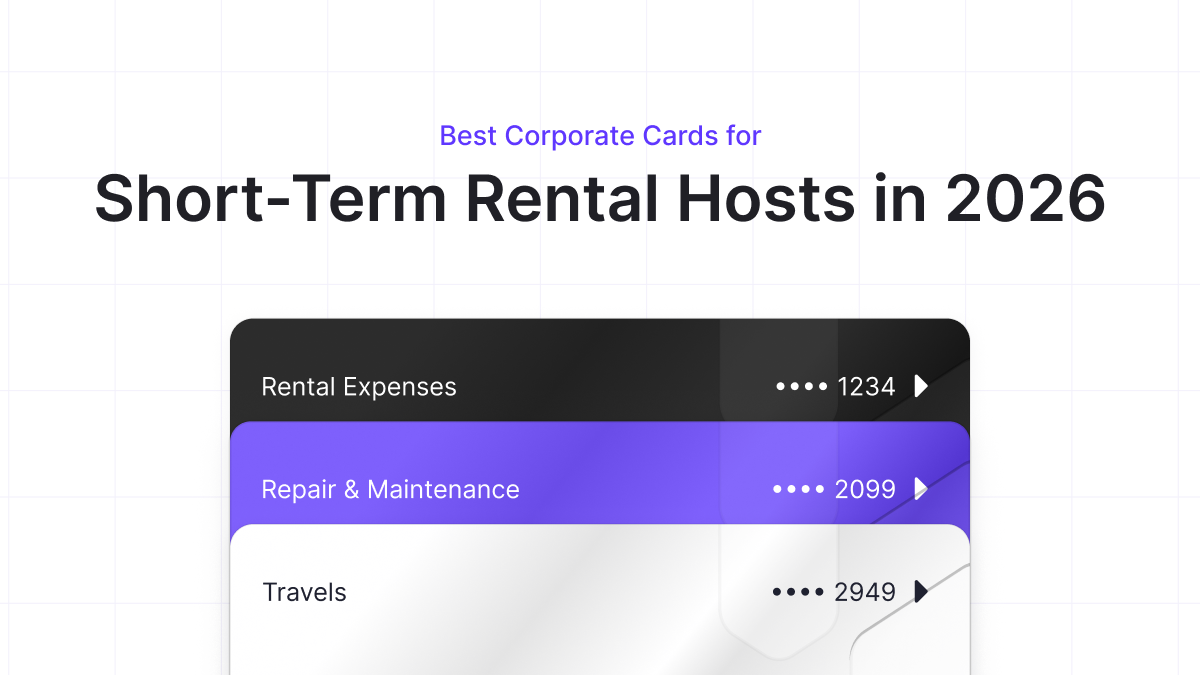

Corporate cards, banking and expense management built for real estate businesses.
Glep is a financial technology company, not an FDIC-insured bank. Banking services are provided by Core Bank, Member FDIC. FDIC deposit insurance covers the failure of an insured bank. Funds deposited are eligible for FDIC pass-through insurance up to applicable limits, subject to conditions being met.
The Glep Visa Card is issued by Core Bank pursuant to a license from Visa U.S.A. Inc. and may be used everywhere Visa is accepted. Card purchases may be eligible for cash back. Cash back and other rewards are offered by Glep through its Rewards Program, not by Core Bank.
Visa is a registered trademark of Visa International Service Association. All other trademarks and service marks belong to their respective owners.
Aida is an AI-powered assistant developed by Glep Labs. Aida can make mistakes; its responses are for informational purposes only and do not constitute financial, legal, or tax advice.
Testimonials reflect individual experiences and may not be representative of all customers. Individual results may vary.