

August 9, 2026
Micheal J
2026-09-14
The Best Business Bank Accounts and Financial Platforms for Real Estate Businesses

The Hidden Cost of Running Real Estate on Generic Business Banking
Operating a real estate portfolio requires financial infrastructure that understands property-level cash flow, multi-entity liability walls, and capital expenditure tracking. Yet, countless property managers, real estate investors, and developers attempt to run their businesses using generic business bank accounts or startup-focused fintech platforms. When your primary banking tools are designed for software companies, e-commerce brands, or generic consultants, your daily operations inevitably grind against structural roadblocks.
Traditional bank accounts provide basic checking and savings facilities but offer zero native software for managing a portfolio. You are left stitching together disconnected tools: spreadsheets to track per-property expenses, personal credit cards for emergency maintenance runs, and manual ledger entries to prepare for month-end reconciliation. Meanwhile, modern digital fintechs designed for venture-backed startups often impose risk models that flag legitimate real estate transactions—such as large earnest money deposits, irregular contractor wires, and multi-LLC transfers—as suspicious anomalies.
To protect your margins and scale your operations without drowning in administrative overhead, you need financial services engineered from the ground up for the realities of real estate. Evaluating your options requires looking past flashy marketing metrics and examining how well a platform handles multi-entity accounting, automated expense tagging, and granular spending controls.
Why Tech-First Fintechs Like Mercury and Brex Reject Real Estate Operators
The rise of digital-first business banking has transformed financial management for many industries, but it has created unique compliance hurdles for real estate professionals. Platforms like Mercury and Brex built their underwriting and risk-monitoring systems around tech startups, SaaS companies, and digital agencies. Their automated compliance algorithms look for predictable subscription revenue, venture capital funding rounds, and software-as-a-service business models.
Real estate businesses operate on an entirely different financial cadence. Your cash movement involves capital-intensive property acquisitions, title company escrow wires, high-volume material purchases at local supply yards, and frequent disbursements to independent contractors and handymen. When these transactions flow through accounts governed by startup-centric risk models, operators frequently experience unexpected account freezes, burdensome compliance reviews, and sudden policy restrictions.
Furthermore, generic fintechs treat your business as a monolithic single entity. If you structure your portfolio correctly—holding each property or market in a separate LLC to maximize liability protection—generic platforms force you to juggle multiple separate logins, switch between disparate dashboards, and pay recurring administrative friction costs just to move funds between your own holdings. Real estate operators deserve banking and spend management that respects asset protection structures rather than penalizing them.
Comparative Breakdown: Real Estate Financial Platforms vs. Generic Fintech Alternatives
Evaluating the right financial stack means understanding how different providers stack up against the specific operational demands of property portfolios, rehab projects, and multi-entity holding structures.
Generic Startup Fintechs (e.g., Mercury, Brex, Rho)
- Primary Target Audience: Venture-backed startups, SaaS companies, tech agencies
- Per-Property / Per-Deal Tracking: None (Requires manual tagging and custom spreadsheet fields)
- Multi-Entity Management: Basic multi-account access; no native real estate hierarchy
- Contractor & Team Card Controls: Corporate cards designed around corporate org charts, not job sites
Passive Landlord Software (e.g., Baselane, Stessa)
- Primary Target Audience: Small-scale landlords tracking passive rental income
- Per-Property / Per-Deal Tracking: Basic rent collection and basic income ledgering
- Multi-Entity Management: Limited multi-entity structuring for complex portfolios
- Contractor & Team Card Controls: Absent or extremely basic debit cards without advanced merchant locks
Purpose-Built Real Estate Platforms (e.g., Glep)
- Primary Target Audience: Real estate investors, property managers, developers, flippers
- Per-Property / Per-Deal Tracking: Native, automated transaction tagging by property, unit, and deal
- Multi-Entity Management: Unified multi-LLC management from a single dashboard with clean separation
- Contractor & Team Card Controls: Advanced virtual and physical cards with hard budget caps and merchant locks
The Multi-Entity Nightmare: Why Traditional Portfolios Break Standard Bank Accounts
Risk mitigation in real estate is anchored in entity isolation. Experienced investors rarely hold ten properties in a single operating company. Instead, prudent legal and tax strategies dictate establishing distinct limited liability companies for individual properties, development phases, or partnership structures. Maintaining clean corporate veils requires absolute separation of funds: no commingling operating cash, no crossing expense streams, and meticulous audit trails for every dollar.
Executing this manually across legacy banks or generic fintechs is a monumental administrative burden. Managing five LLCs traditionally means maintaining five separate banking logins, paying maintenance fees on multiple accounts, tracking five different debit card pools, and spending days reconciling statements to ensure an expense paid from LLC A was not accidentally charged on an account belonging to LLC B. Commingling funds in this manner risks piercing your corporate veil during a liability lawsuit, exposing your entire portfolio to a single localized claim.
A modern real estate financial platform solves this structural vulnerability by integrating multi-entity management directly into your core banking and spend architecture. You gain a consolidated, portfolio-wide overview of your entire cash position across every LLC from a single login, while preserving strict legal and accounting separation behind the scenes. Adding a new property or a new project LLC takes minutes, instantly provisioning dedicated routing numbers, accounts, and card programs without requiring a new bank relationship or a branch visit.
Granular Spend Control: Replacing Spreadsheets and Personal Cards with Real-Time Property Tracking
The single greatest operational leak in property management, contracting, and investing is unmonitored outflow. When maintenance technicians carry personal debit cards, when general contractors charge materials to personal credit cards and submit reimbursement spreadsheets at month-end, or when cleaning crews use shared digital wallets, financial visibility vanishes. You discover budget overruns, unauthorized purchases, and billing discrepancies weeks after the fact, when bank statements finally arrive and the damage is already done.
Effective spend management requires intercepting expenses before money moves. Rather than reacting to historical statements, modern operators enforce real-time guardrails directly at the point of transaction:
- Project and Property Budgets: Assign hard spending limits tied directly to specific properties, rehab phases, or operational accounts. When a rehab budget hits its cap, spending stops automatically.
- Controlled Contractor Cards: Issue virtual or physical corporate cards to general contractors, handymen, and property supers with strict limits restricted to specific merchant categories, such as building supply yards or hardware distributors.
- Instant Card Management: Freeze, unfreeze, or terminate cards instantly from your mobile device the moment a crew member rolls off a job or a project wraps up, eliminating long-term security exposure.
- Point-of-Sale Receipt Capture: Require field teams to snap photos of receipts immediately at checkout. The system auto-matches the receipt to the transaction, eliminating lost paperwork and end-of-month receipt chases.
By shifting spend control upstream, you eliminate the traditional month-end scramble. Transactions arrive in your ledger already categorized, verified, and tagged to the correct property or unit.
Intelligent Automation and Cash Flow Visibility for Modern Portfolios
As your portfolio scales from a handful of doors to dozens or hundreds of units, the volume of incoming rents, vendor disbursements, utility payments, and debt service transactions creates an overwhelming data processing challenge. Traditional bookkeeping workflows rely heavily on manual data entry, downloading CSV statements, and assigning line items by memory or guesswork.
Integrating modern banking, corporate cards, and automated expense tagging into a single ecosystem transforms financial oversight from a reactive chore into a proactive operational advantage. When every transaction—whether executed via ACH transfer, wire, RTP, or corporate card swipe—is automatically attributed to its respective property or deal at the exact moment of payment, your financial statements update in real time.
This continuous visibility unlocks powerful analytical capabilities. Instead of waiting for quarterly reports to discover whether a specific multi-family asset or short-term rental listing is actually profitable after factoring in turnover costs and maintenance overhead, you maintain an up-to-the-minute view of true Net Operating Income (NOI) per door. AI-powered financial assistants can monitor your spending patterns around the clock, flag anomalous invoice spikes, forecast upcoming cash flow positions, and surface actionable insights regarding budget variances before minor cost overruns escalate into major financial strain.
Transitioning Your Real Estate Operations to a Unified Financial Ecosystem
Modernizing your real estate financial stack does not require upending your entire accounting workflow or abandoning the ledger tools your CPA relies on. Purpose-built financial platforms operate upstream of your accounting software, serving as the secure engine where your money actually lives and moves. By automating the capture, categorization, and property-level tagging of every transaction before it ever reaches your general ledger, you eliminate the tedious data-entry bottleneck entirely.
Whether you are managing single-family rental portfolios, executing fix-and-flip rehabs, operating multi-family developments, or running commercial real estate spaces, your financial infrastructure should work as hard as your acquisition team. Moving away from generic startup fintechs and disjointed legacy bank accounts allows you to consolidate banking, corporate cards, bill pay, and expense management into a single, unified platform designed explicitly for the built environment.
Stop letting legacy bank friction and generic software limitations slow down your growth. Equip your business with the financial platform engineered for real estate operators who demand absolute clarity, airtight entity separation, and total control over every dollar in their portfolio.
Run every property like a business. Join real estate investors, property managers, and developers scaling their portfolios on Glep.

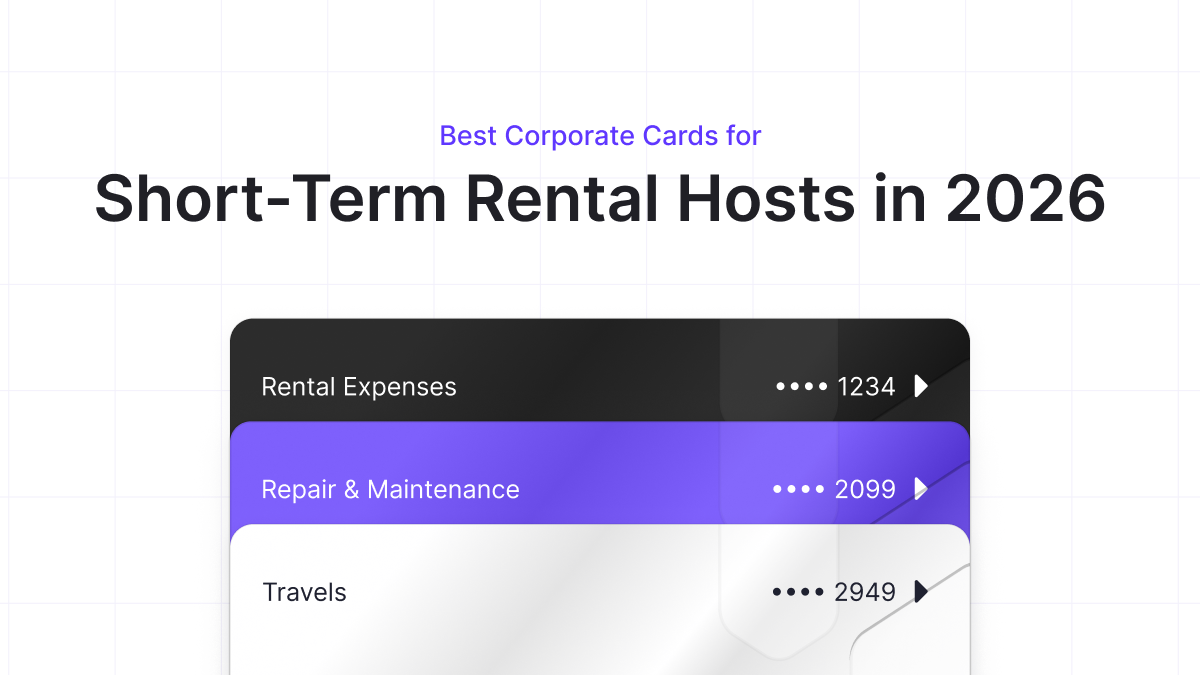

Corporate cards, banking and expense management built for real estate businesses.
Glep is a financial technology company, not an FDIC-insured bank. Banking services are provided by Core Bank, Member FDIC. FDIC deposit insurance covers the failure of an insured bank. Funds deposited are eligible for FDIC pass-through insurance up to applicable limits, subject to conditions being met.
The Glep Visa Card is issued by Core Bank pursuant to a license from Visa U.S.A. Inc. and may be used everywhere Visa is accepted. Card purchases may be eligible for cash back. Cash back and other rewards are offered by Glep through its Rewards Program, not by Core Bank.
Visa is a registered trademark of Visa International Service Association. All other trademarks and service marks belong to their respective owners.
Aida is an AI-powered assistant developed by Glep Labs. Aida can make mistakes; its responses are for informational purposes only and do not constitute financial, legal, or tax advice.
Testimonials reflect individual experiences and may not be representative of all customers. Individual results may vary.